Libya

Libya faces a protracted humanitarian situation due to recurrent armed violence and governance and economic challenges. Added to this, unprecedented flooding in September 2023 caused large scale infrastructure damage and thousands of civilian deaths.

Insecurity Insight documents conflict events affecting aid operations, education and health care as well as incidents of explosive weapons use in Libya.

Our data can be downloaded on the Humanitarian Data Exchange (HDX) and corresponding reports can be accessed below.

Quick Links

Situation Reports

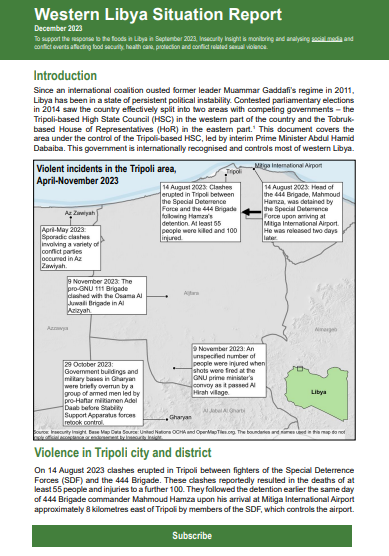
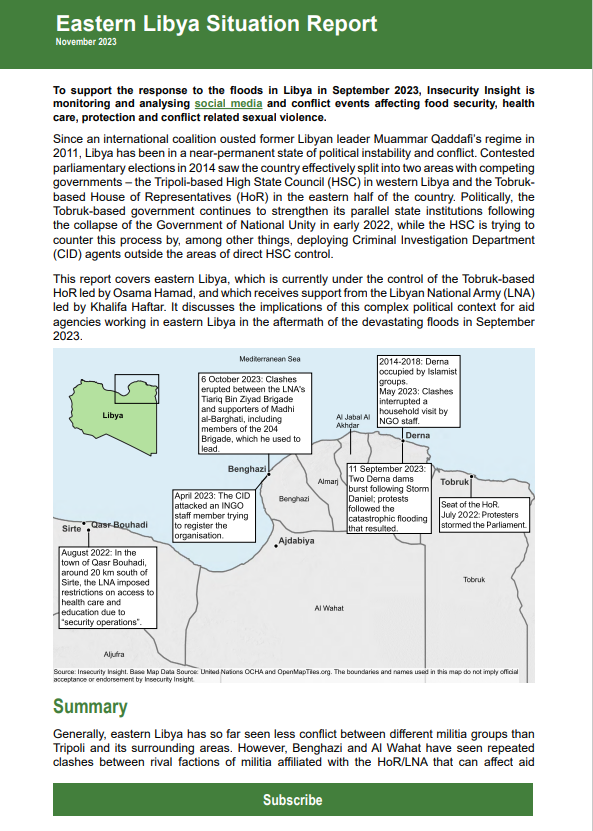
This situation report covers eastern Libya. It discusses the implications of the complex political context for aid agencies working in eastern Libya and provides an assessment of possible events that aid agencies may anticipate and plan for, allowing them to respond with conflict-sensitive plans to ensure the safety of staff and aid access and the protection of the humanitarian space.

Social Media Monitoring

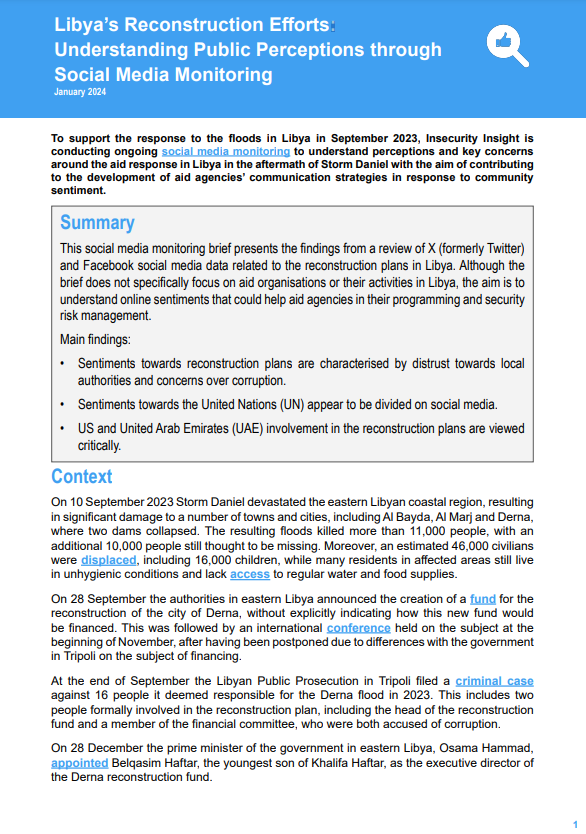
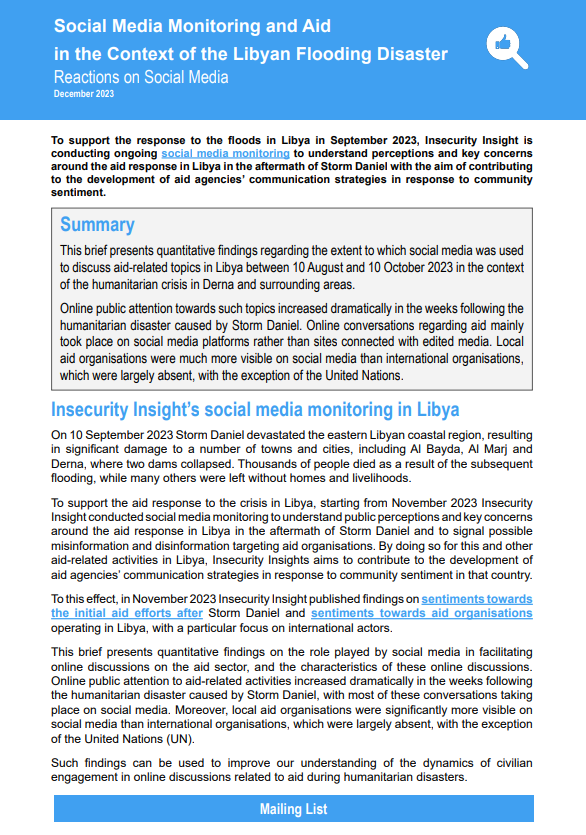
To support the flooding response in Libya, Insecurity Insight is conducted social media monitoring to understand perceptions and key concerns around the aid response in the country and contribute to the development of aid agencies’ communication strategies in response to community feedback.

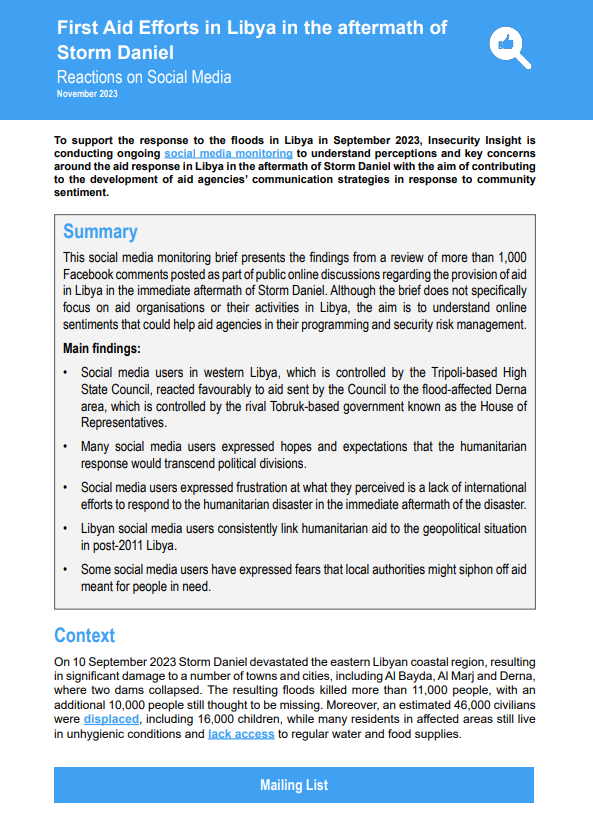
This report – First Aid Efforts in Libya in the aftermath of Storm Daniel – presents the findings from a review of more than 1,000 Facebook comments posted as part of public online discussions regarding the provision of aid in Libya in the immediate aftermath of Storm Daniel. Although the brief does not specifically focus on aid organisations or their activities in Libya, the aim is to understand online sentiments that could help aid agencies in their programming and security risk management.

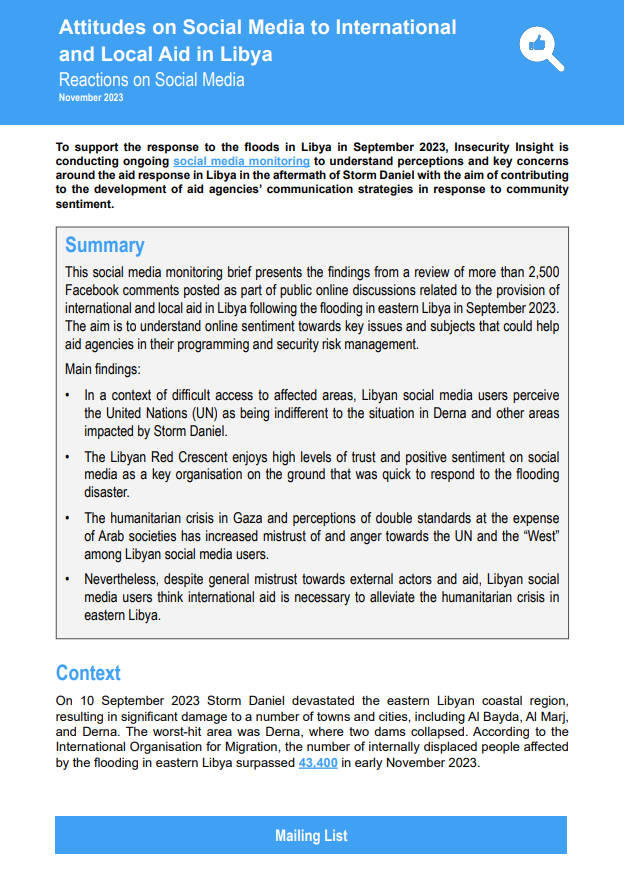
A further report – Attitudes on Social Media to International and Local Aid in Libya – aims is to understand online sentiment towards key issues and subjects that could help aid agencies in their programming and security risk management.

Health Care

2020 Safeguarding Health in Conflict Coalition (SHCC) Factsheet

The Safeguarding Health in Conflict Coalition (SHCC) identified 77 incidents of violence against or obstruction of health care in Libya in 2020, compared to 73 such incidents in 2019. Those responsible for these incidents damaged or destroyed health facilities, and killed and injured health workers, forcing health facilities to close with potentially devastating consequences for an effective COVID-19 response.

In April 2020 violence against health care rose significantly with hospitals damaged or forced to close due to renewed hostilities and violence between warring parties in western Libya. Violence was most frequently reported in Tripoli, surrounding districts in the western Tripolitania region, and Misrata. The main perpetrators were LNA forces, armed militias, and GNA and Turkish forces.

Read the full factsheet here and download the data here.

Published every two weeks, Insecurity Insight’s Attacks on Health Care New Brief tracks global threats and violence as well as protests and other events affecting the delivery of and access to health care. Explore our interactive map to see where incidents happened.