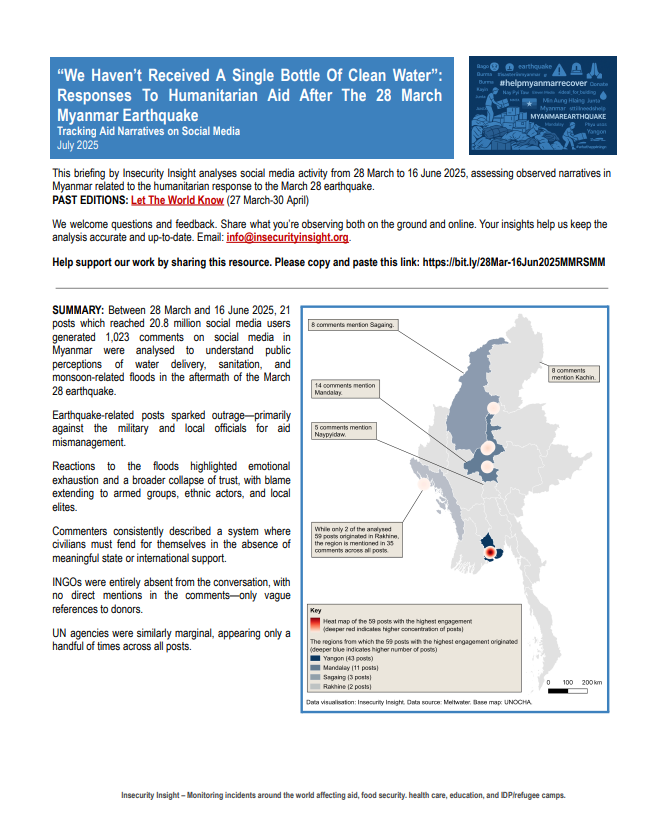
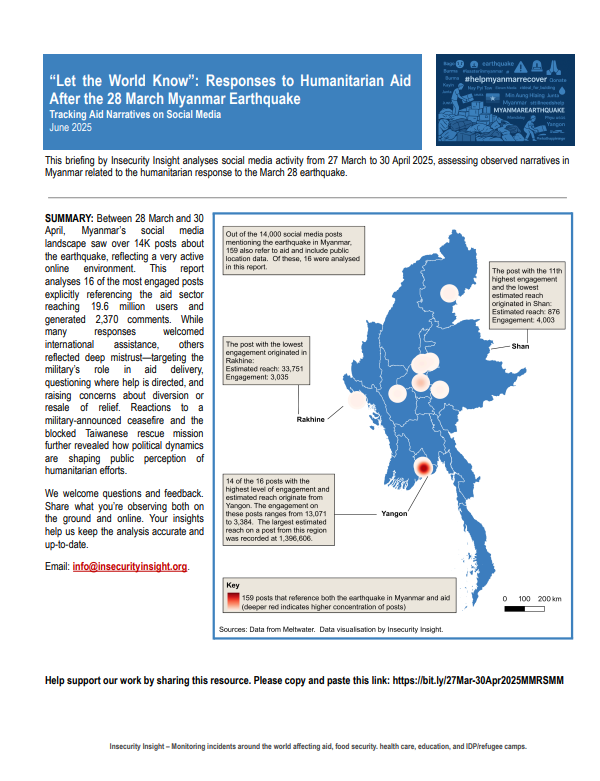
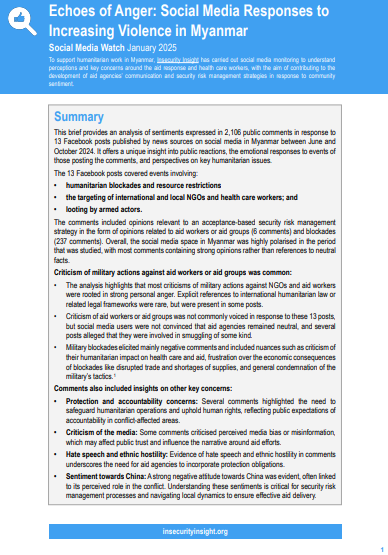
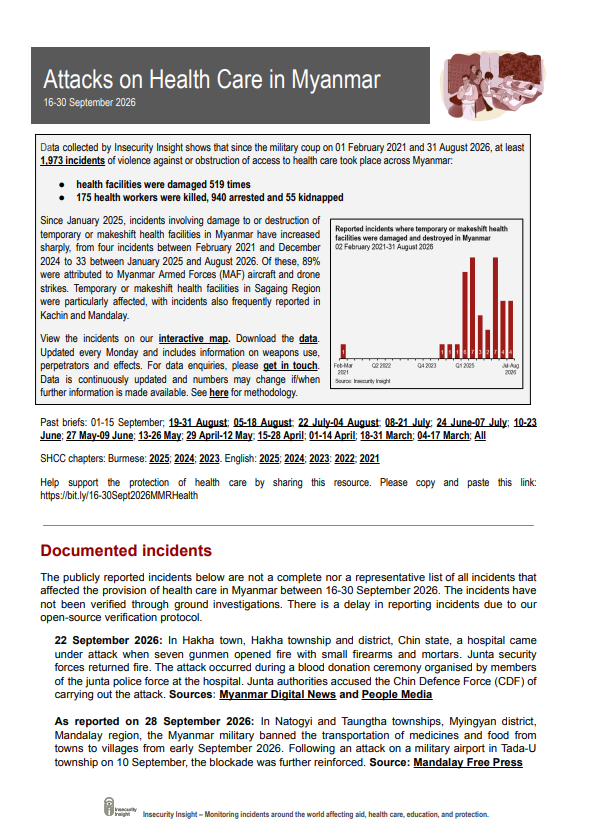
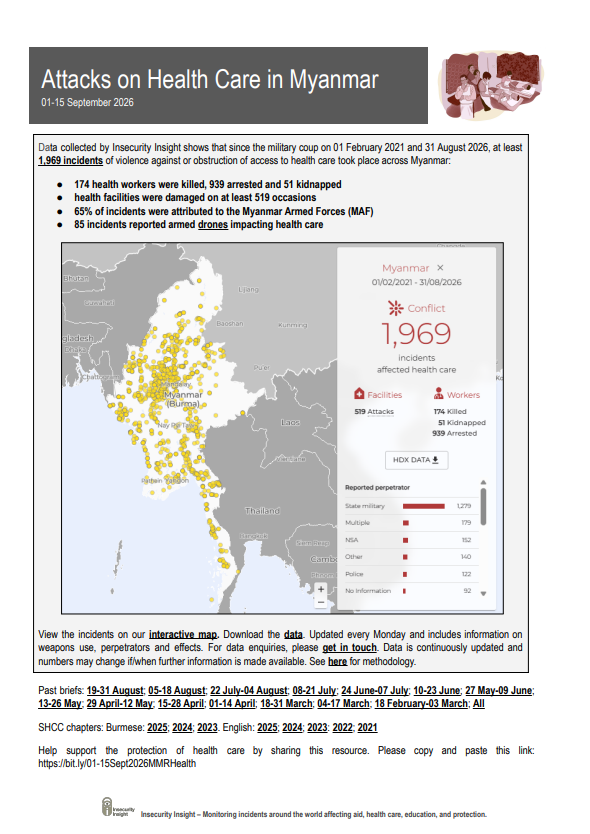
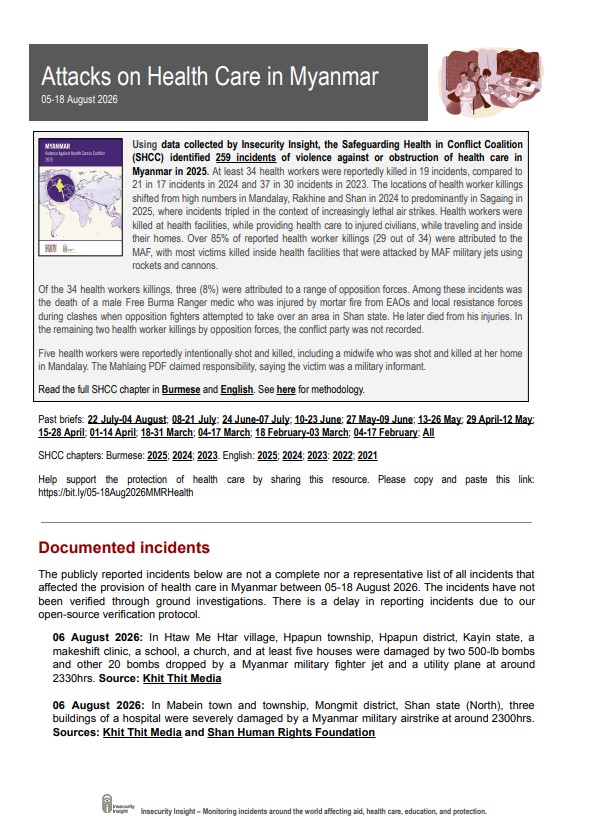
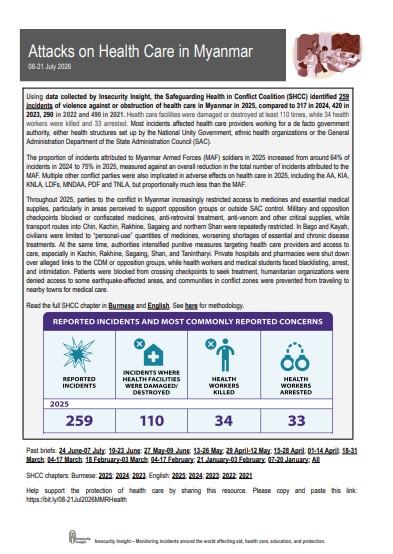
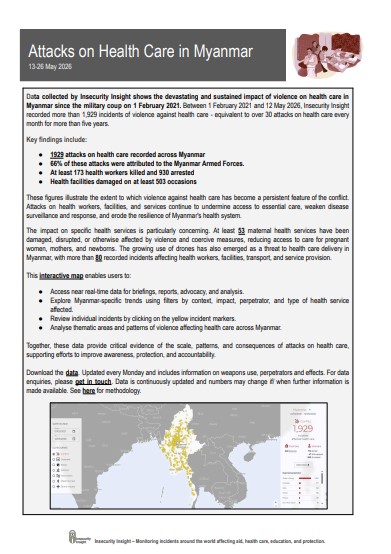
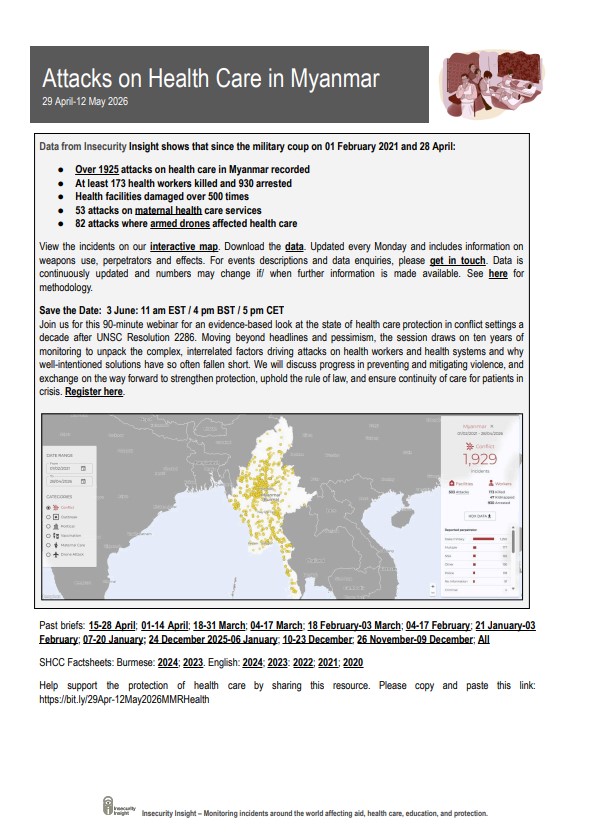
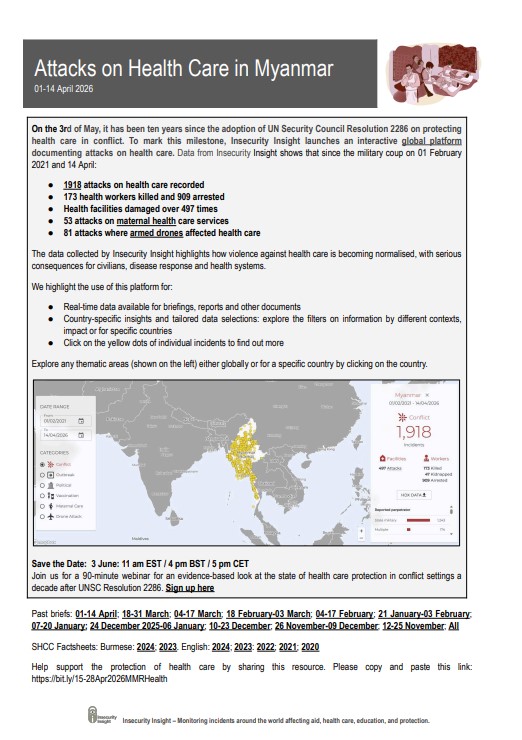
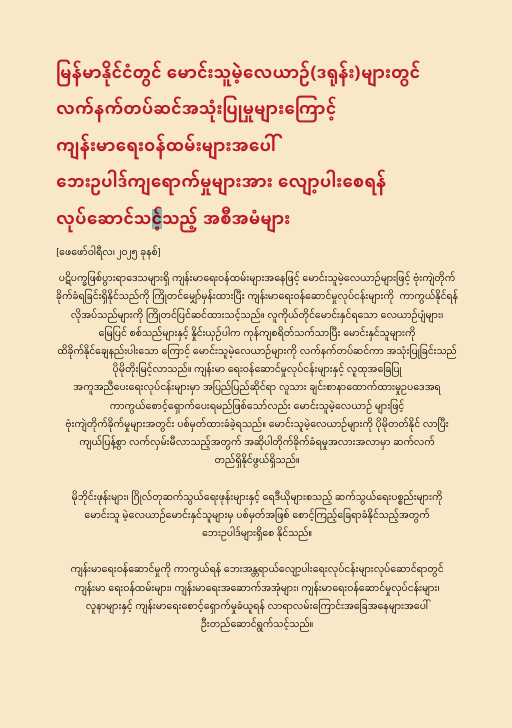
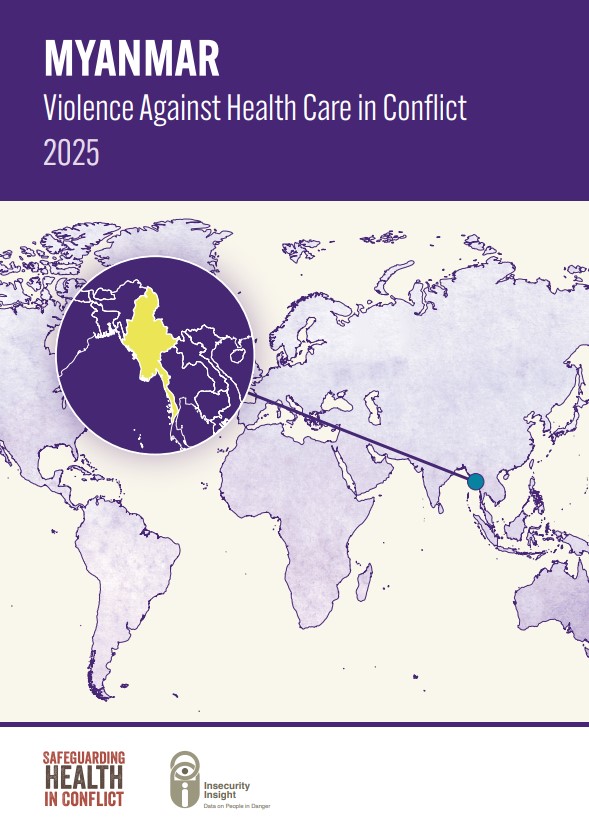
Insecurity Insight monitors attacks on health care in Myanmar, and based on its data, the Myanmar chapter (in Burmese and English) of the 2025 Safeguarding Health in Conflict Coalition (SHCC) report Care in the Crosshairs identified 259 incidents of violence against or obstruction of health care in Myanmar in 2025. Health care facilities were damaged or destroyed at least 110 times, while 34 health workers were killed and 33 arrested.
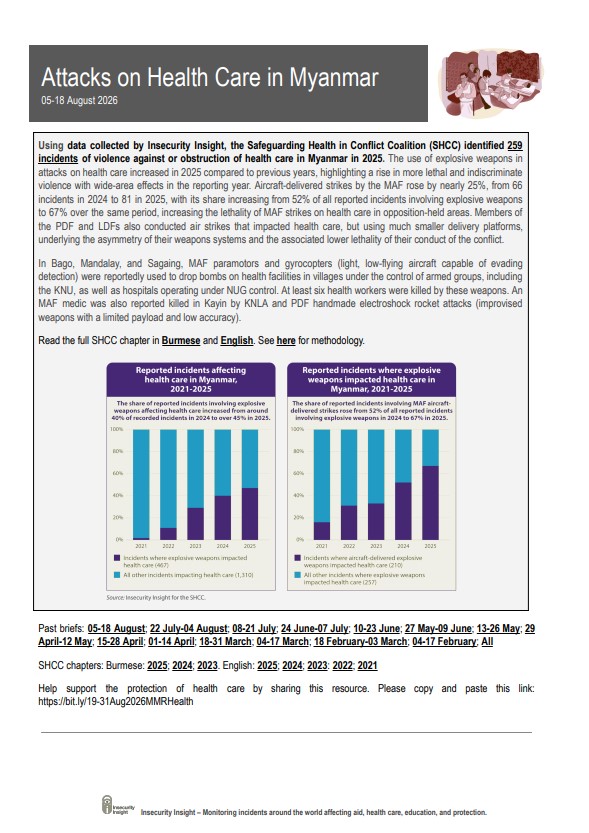
The proportion of incidents attributed to MAF soldiers in 2025 increased from around 64% of incidents in 2024 to 75% in 2025, measured against an overall reduction in the total number of incidents attributed to the MAF. The use of explosive weapons in attacks on health care increased in 2025 compared to previous years, highlighting a rise in more lethal and indiscriminate violence with wide-area effects in the reporting year.The proportion of incidents where explosive weapons impacted health care rose from around 40% of all incidents in 2024 to over 45% in 2025.
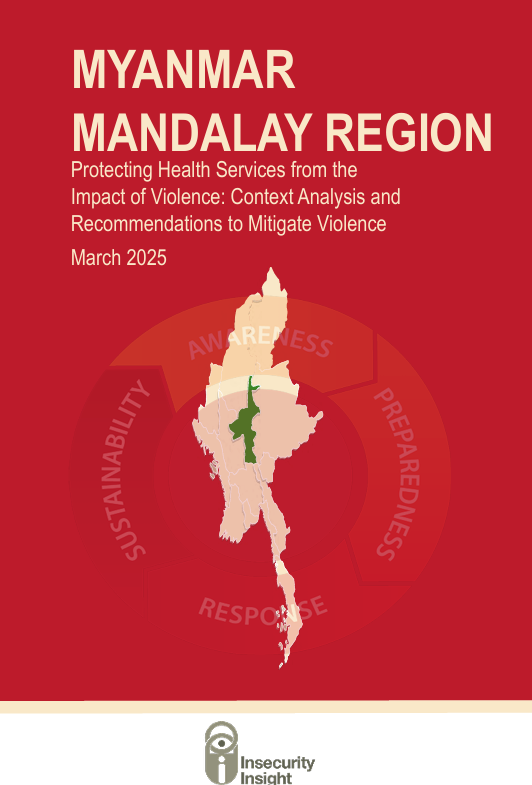
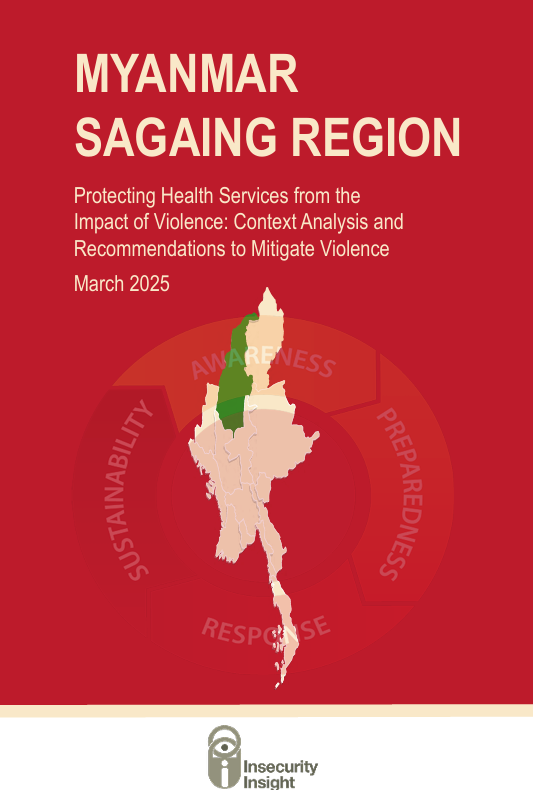
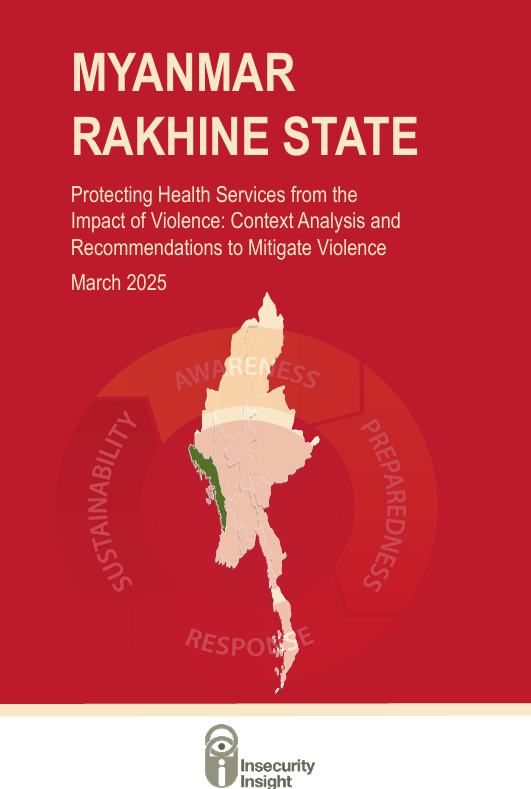
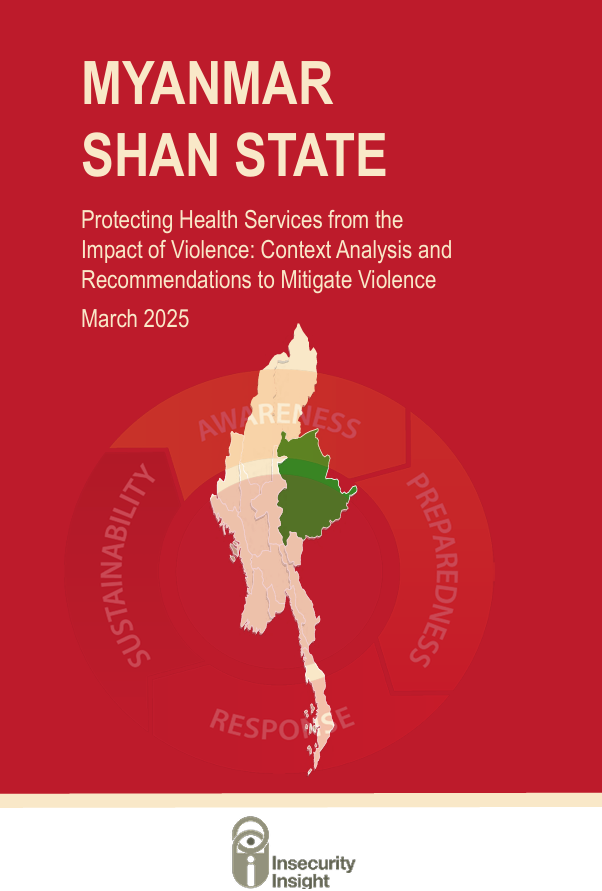
Protecting Health Services from the Impact of Violence Insecurity Insight has developed a series of regional analyses for Myanmar covering the states of Kayin, Mandalay, Rakhine, Sagaing and Shan. The analyses provide detailed information regarding reported violence against health care in each of these states and suggest approaches to mitigate and prevent such violence informed by reported patterns of violence, individual health workers’ experiences and studies of how violence disrupted the provision of services. The approach of the analyses is informed by Insecurity Insight’s Security Risk Management for Health Care Services handbook.
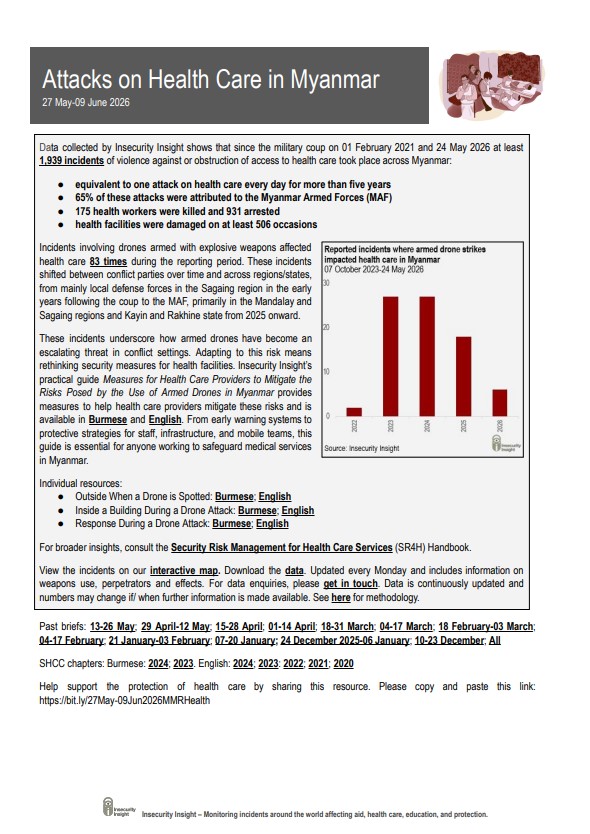
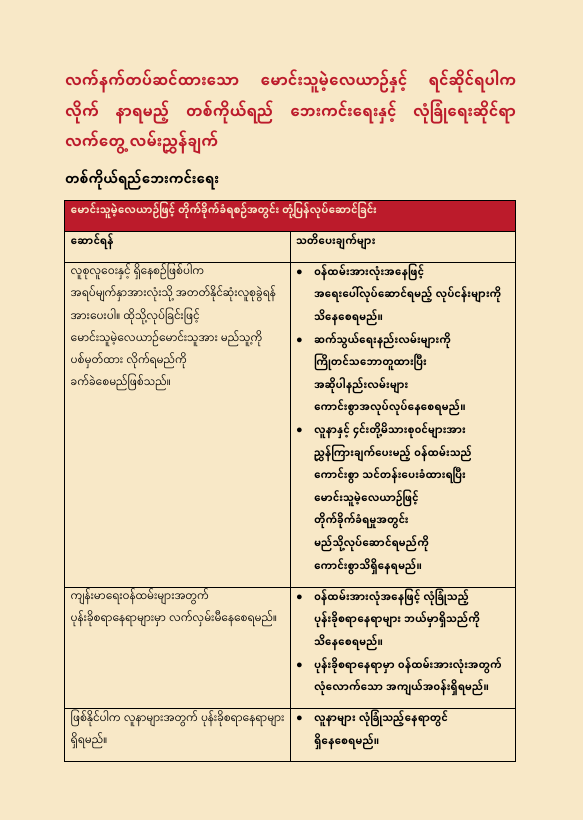
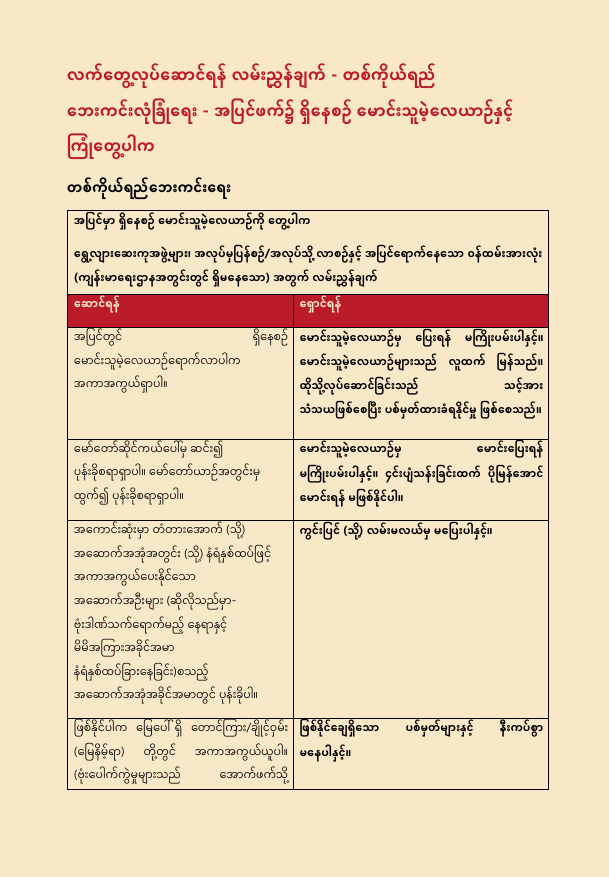
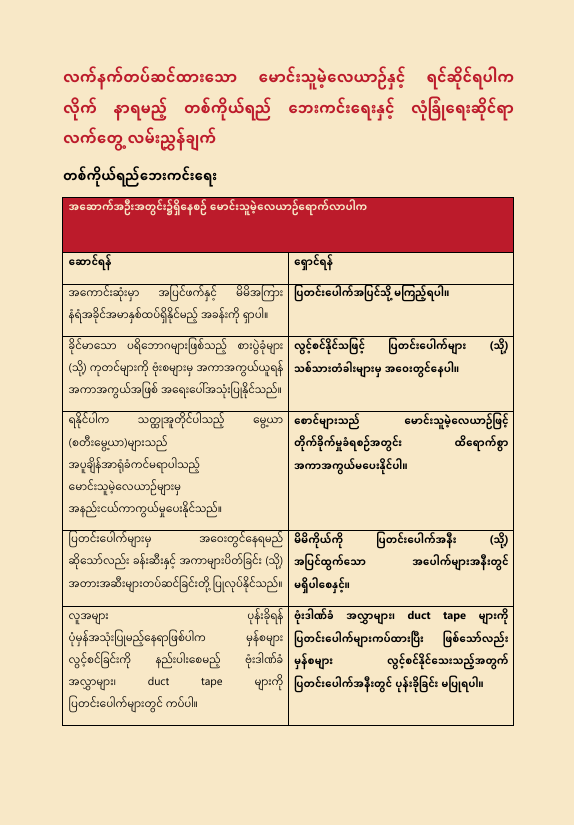
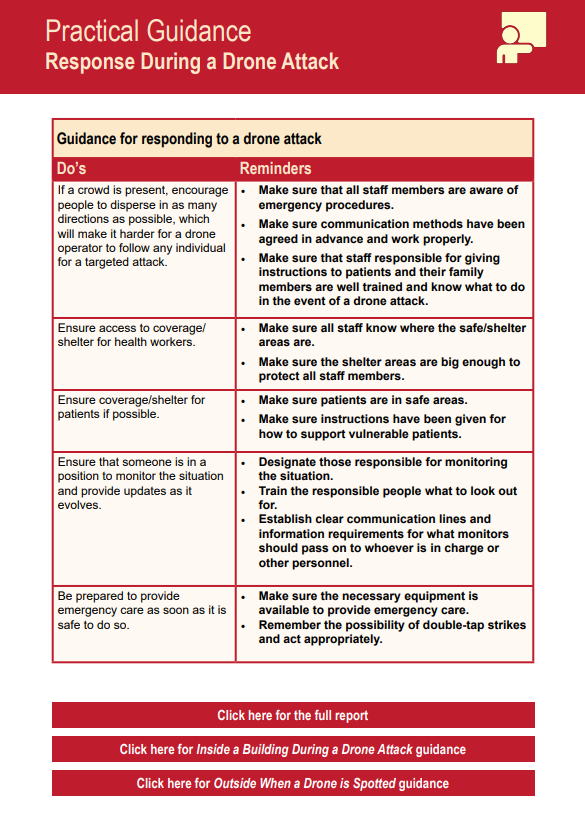
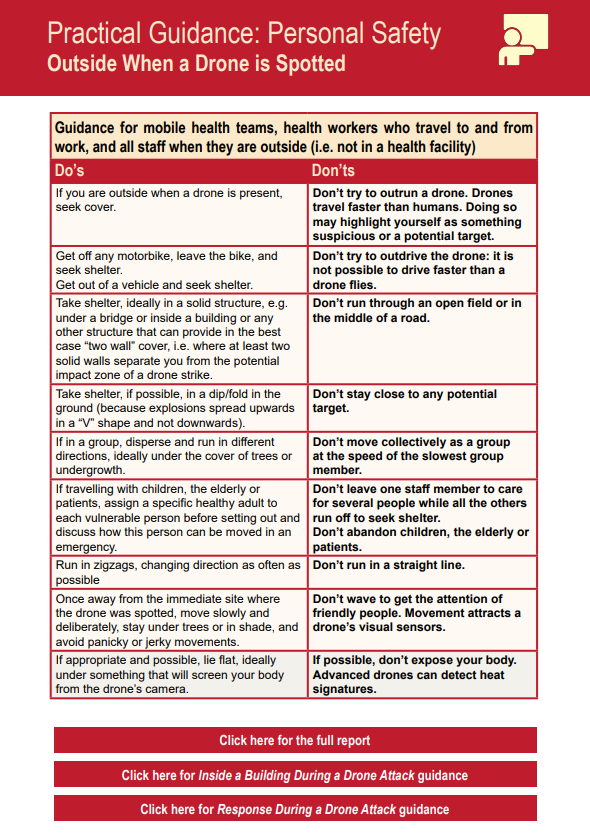
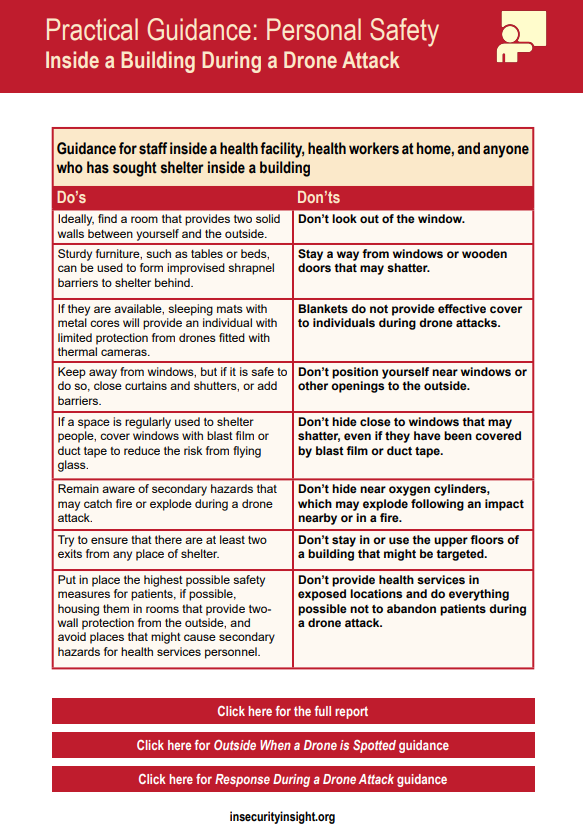
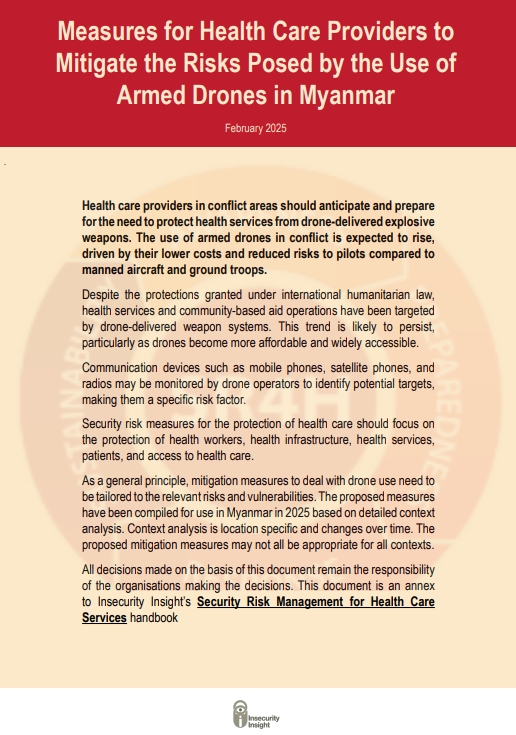
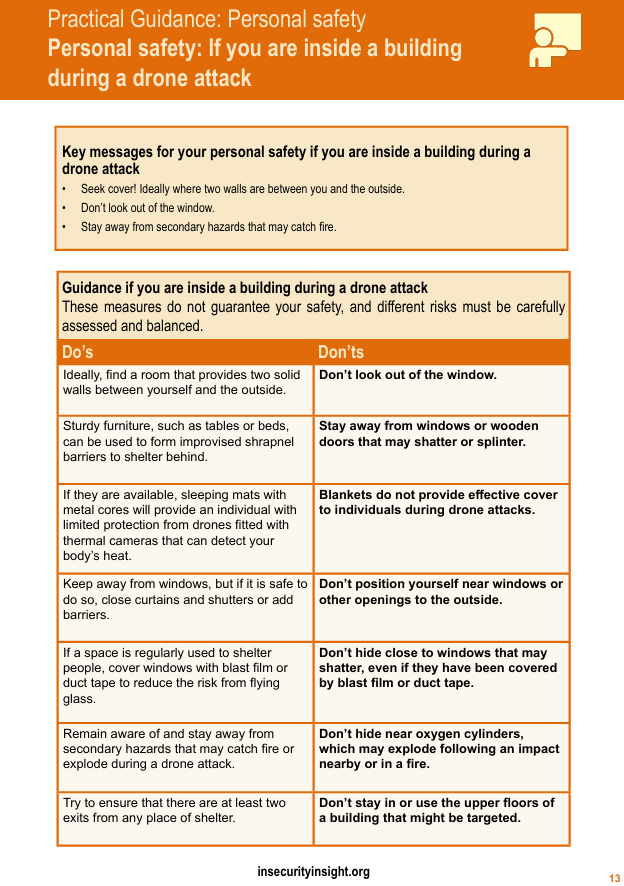
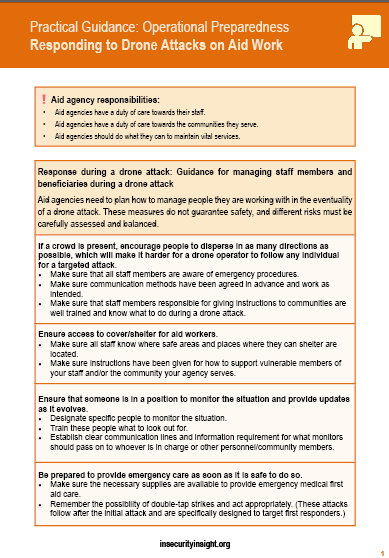
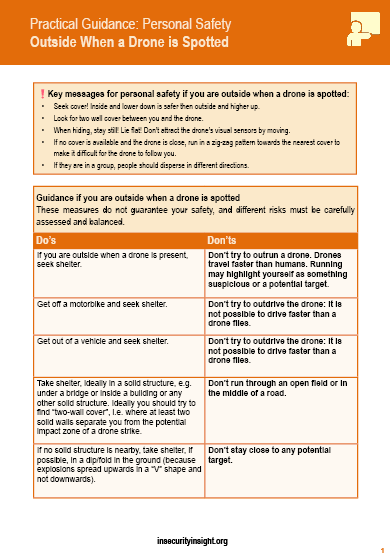
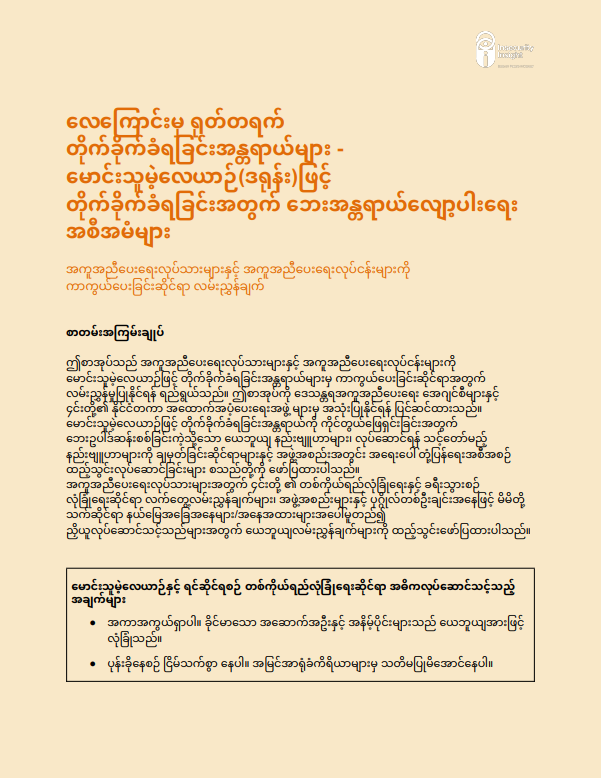
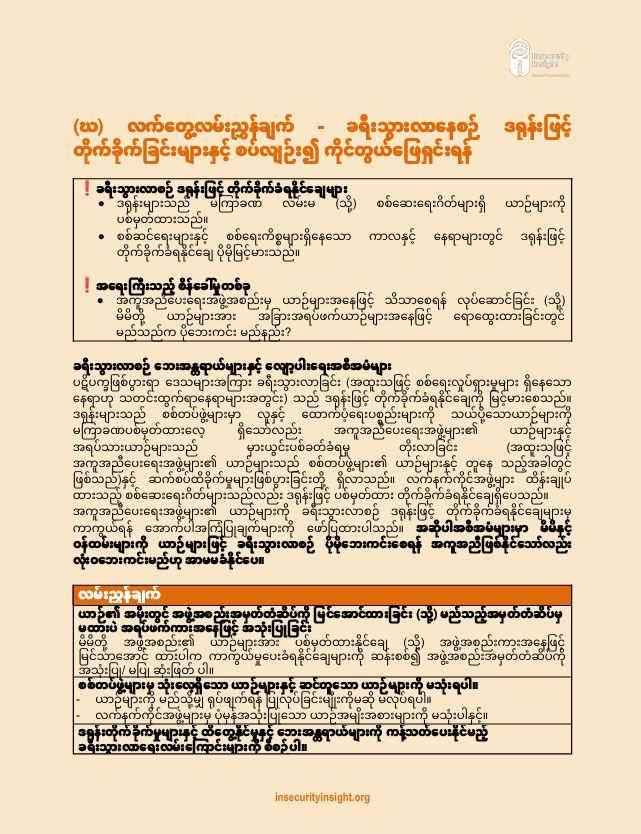
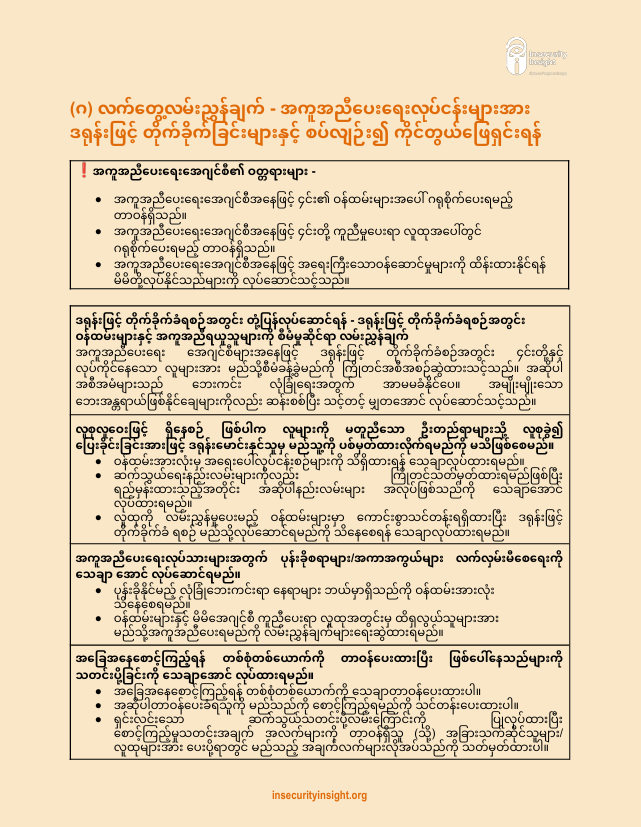
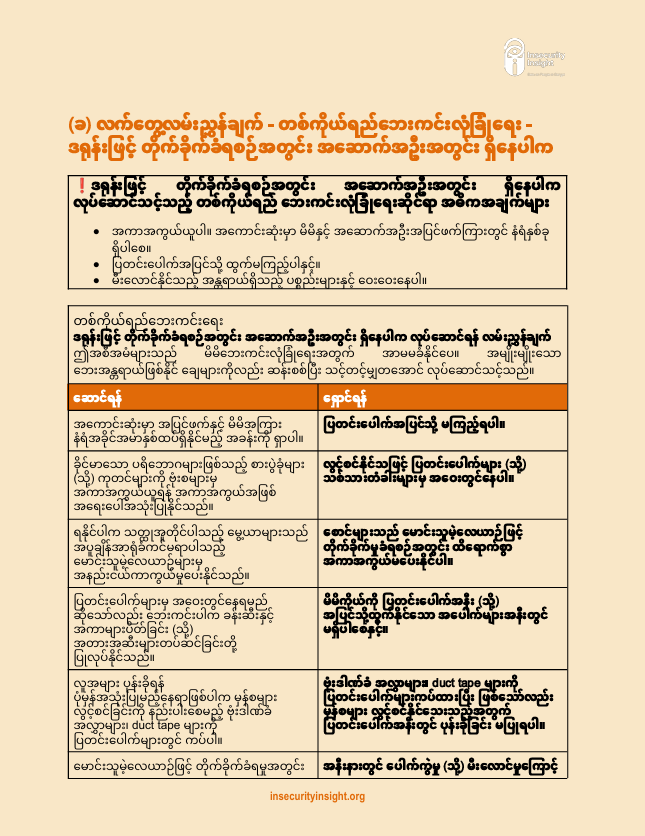
Measures for Health Care Providers to Mitigate the Risks Posed by the Use of Armed Drones in Myanmar The use of armed drones in conflict is expected to rise, driven by their lower costs and reduced risks to pilots compared with manned aircraft and ground troops. Based on detailed context analysis of Myanmar, Insecurity Insight has produced a document detailing specific measures for health care providers to take to mitigate the risks posed by the use of armed drones in Myanmar. Download the full guidance (available in Burmese and English) or access the three information posters designed for posting on walls, sharing with staff, including in trainings, using in briefings, or distributing through community networks:- Outside When a Drone is Spotted: Burmese; English– Inside a Building During a Drone Attack: Burmese; English – Response During a Drone Attack: Burmese; English
Published every two weeks, Insecurity Insight’s Attacks on Health Care New Brief tracks global threats and violence as well as protests and other events affecting the delivery of and access to health care. Explore our interactive map to see where incidents happened.