South Sudan

Violent conflict, intercommunal violence, forced displacement and food insecurity have created a situation of severe humanitarian need in South Sudan.

Insecurity Insight monitors conflict events affecting aid operations, food and water systems, health care, and protection as well as incidents of conflict-related sexual violence in South Sudan.

Our data can be downloaded on the Humanitarian Data Exchange (HDX) and corresponding reports can be accessed below.

Quick Links

Health Care

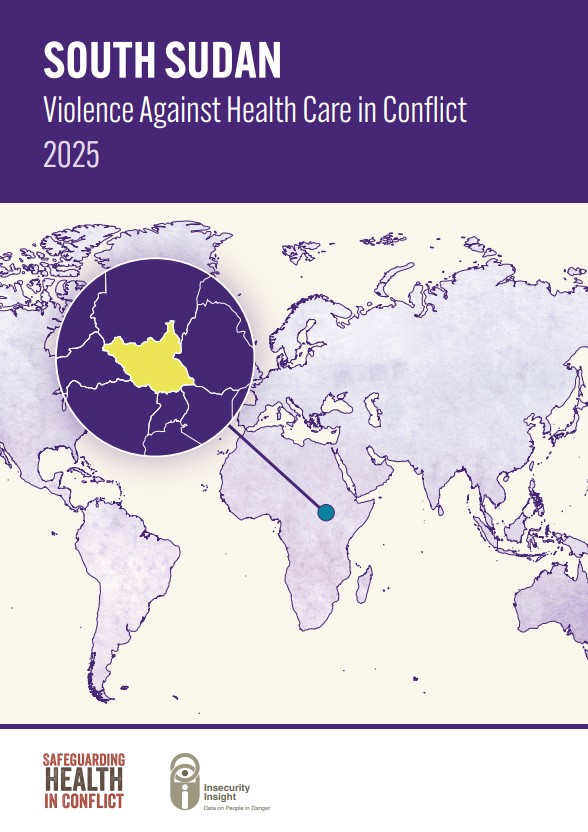
Insecurity Insight monitors attacks on health care in South Sudan, and based on its data, the South Sudan chapter of the 2025 Safeguarding Health in Conflict Coalition (SHCC) report Care in the Crosshairs identified 31 incidents of violence against or obstruction of health care in South Sudan in 2025. Five health workers were killed and four kidnapped, while health facilities were damaged or destroyed on five occasions and medical supplies looted on seven occasions.

In 2025, reported incidents spreading to Lakes, Unity, Northern and Western Bahr el Ghazal, Upper Nile, and Western Equatoria. Damage to or the destruction of health facilities increased, along with the looting of medical supplies. Health worker killings and kidnappings persisted. Most incidents were attributed to unidentified men armed with guns.

Published every two weeks, Insecurity Insight’s Attacks on Health Care New Brief tracks global threats and violence as well as protests and other events affecting the delivery of and access to health care. Explore our interactive map to see where incidents happened.
Sexual Violence

A wide variety of armed groups have been accused of committing abuses against civilians in South Sudan, including sexual violence, which is frequently used as a tactic to displace and terrorise rival communities. Insecurity Insight documents such violence. Our data is accessible on the Humanitarian Data Exchange here.

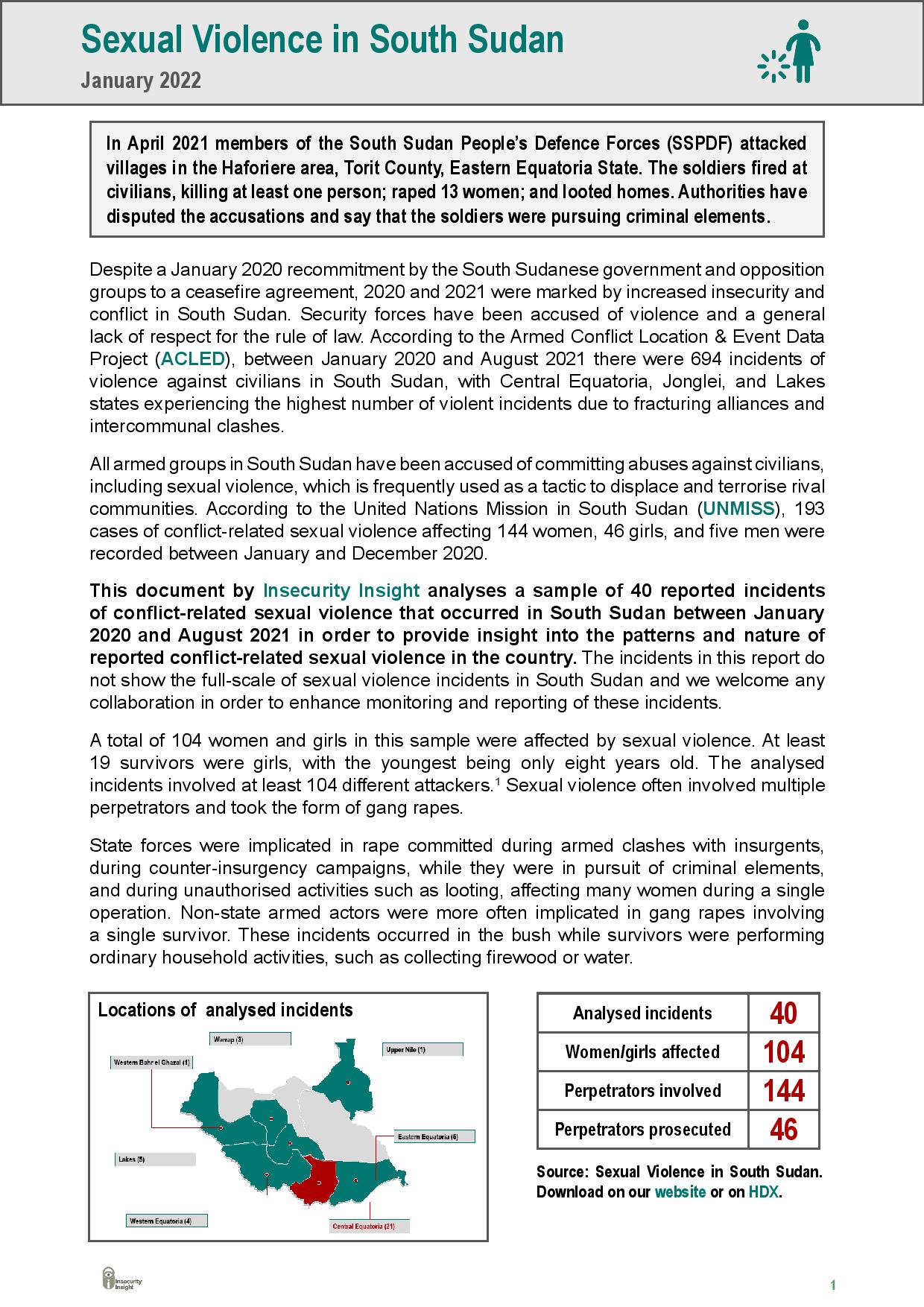
Insecurity Insight’s latest report on sexual violence in South Sudan analyses 40 reported incidents of conflict-related sexual violence between January 2020 and August 2021. It revealed that women and girls were often attacked by members of state forces during clashes with armed groups and counter-insurgency operations, highlighting the extent to which sexual violence may form part of a strategy to fight insurgents by attacking their families or to strengthen group cohesion among perpetrators. The full report is accessible here.