Ethiopia

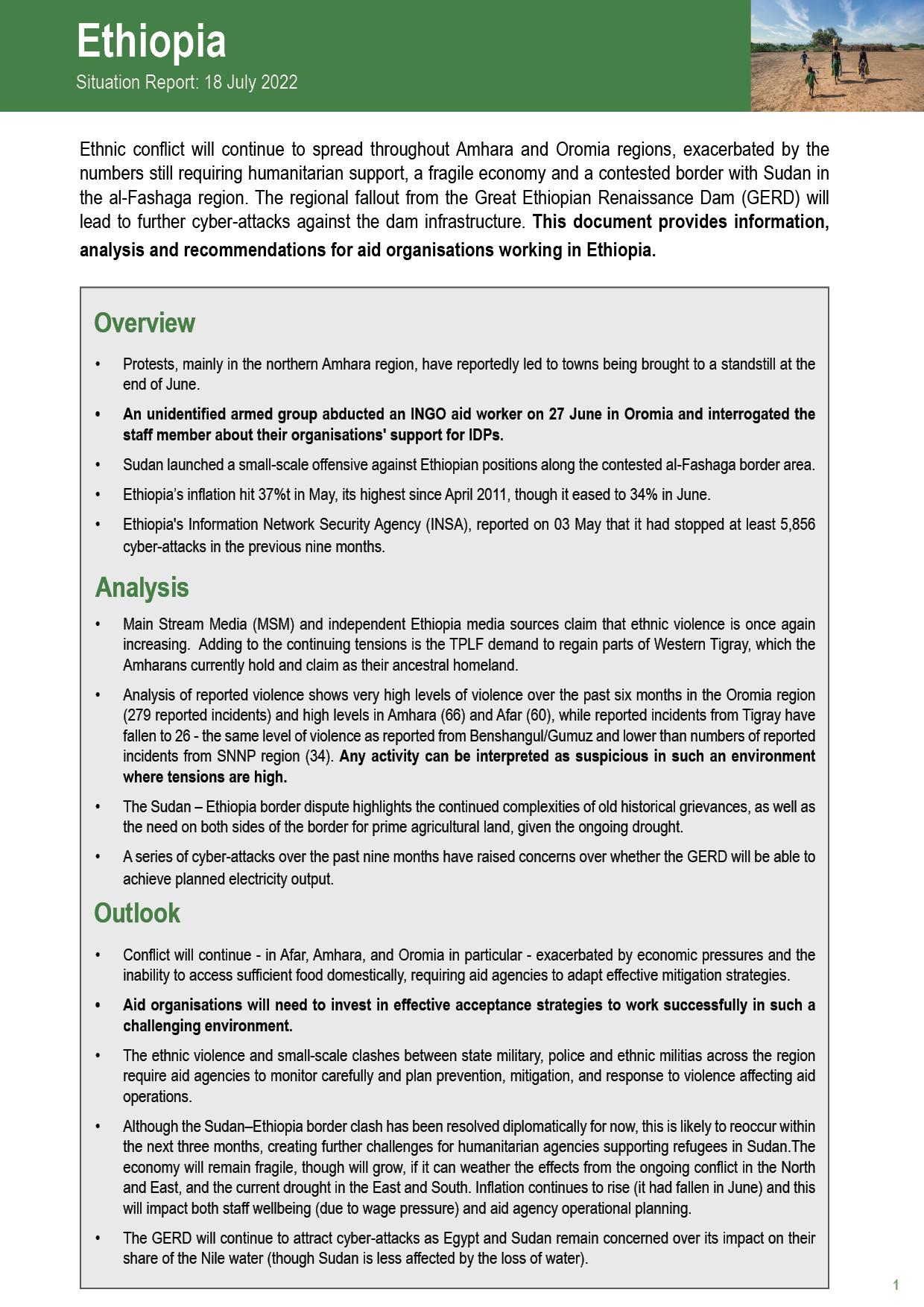
Aid-sector tailored predictive situation analysis on Ethiopia to support aid agencies’ strategic security decision-making.

Insecurity Insight documents conflict events affecting aid operations, education, health care and protection as well as conflict-related sexual violence and explosive weapons use in Ethiopia.

Our data can be downloaded on the Humanitarian Data Exchange (HDX) and corresponding reports can be accessed below.

Quick Links

Health

Insecurity Insight monitors attacks on health care in Ethiopia, and based on its data, the Ethiopia chapter of the 2025 Safeguarding Health in Conflict Coalition (SHCC) report Care in the Crosshairs identified 69 incidents of violence against or obstruction of health care in Ethiopia in 2025. Among incidents reported in 2025, 68 health workers were arrested and 17 killed, while health care facilities were reportedly violently raided or searched on 12 occasions. A total of 25 incidents were related to political protests during a nationwide strike that began in May 2025. The remaining 44 incidents occurred in the context of armed conflict.

Incidents in the Amhara region increased by 64% between 2024 and 2025, where many health workers were arrested during May strikes. Recorded incidents in the Oromia region continued. New incidents were documented in the Gambela region in 2025, where ambulances were shot at by unidentified armed groups

Violent raids and searches of health facilities and health worker arrests reportedly increased in 2025, particularly in Amhara. Recorded health worker killings and kidnappings persisted. All 17 reported health worker killings in Ethiopia in 2025 were recorded in the Amhara region.

Published every two weeks, Insecurity Insight’s Attacks on Health Care New Brief tracks global threats and violence as well as protests and other events affecting the delivery of and access to health care. Explore our interactive map to see where incidents happened.
Aid in Danger

Humanitarian organisations have been denied or delayed access to many conflict-affected regions and communication blackouts persist in some areas. Ethiopian aid workers have been killed whilst others remain unaccounted for in Tigray region. Data

Sexual Violence

Reports of systematic sexual violence by conflict parties have been reported during the Tigray conflict. Tigrayan women have been raped at gunpoint and forced to have sex with other family members or in exchange for basic commodities. In some cases, their family members were made to watch. In other cases, women were taken to an Eritrean military camp and repeatedly raped by Eritrean soldiers.

Women and girls in refugee camps in the region were particularly targeted. Witnesses to these incidents were threatened and warned against identifying perpetrators or reporting the incidents. Data

Education

Schools and teachers have been harmed amidst violence in Oromio, Benishangul-Gumuz, and Tigray regions. Schools associated with ethnic Amhara residents have been burnt down and ethnic Amhara students attacked by Oromo youth organizations during the June protests in Oromio against the assassination of a prominent Oromo artist.

Teachers have been shot and killed by police and federal forces for allegedly organising demonstrations and schools used by armed militiamen and opposition forces to execute civilians in Oromio and Benishangul-Gumuz regions.

Schools have been damaged by Ethiopian National Defence forces airstrikes and set on fire by conflict parties in Tigray. Data

IDPs and Refugees

In Tigray region humanitarian organisations have been denied or delayed access to many conflict-affected regions. Shimelba and Hitsats refugee camps in the north have deliberately been attacked and refugees abducted and killed. Infrastructures inside the camps has also been burnt down. There have been claims of refugees being forced back into Eritrea by Eritrean forces.

Although there have been temporary and intermittent improvements in humanitarian access, this is insufficient to reach all people in need. IDPs have reportedly starved to death, amid mounting evidence of an impending famine in the region. People inside IDP camps have been detained and physically assaulted by Ethiopian and Eritrean soldiers. Data